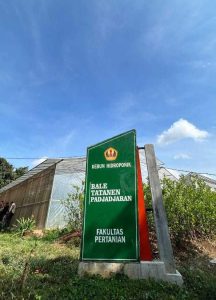
Climate change is increasingly evident and has a significant impact on the agricultural sector, including in Bale Tatanen Faculty of Agriculture Universitas Padjadjaran. To answer this challenge, greenhouse repair is one of the important solutions to maintain productivity and food security.
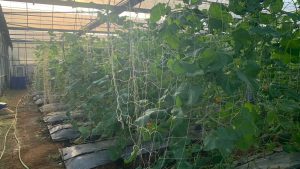
Greenhouse Bale Tatanen, which is typically used to protect plants from extreme weather conditions, needs to be adapted to be more resistant to unexpected climate changes. One of the improvement steps is to strengthen the building structure, for example using materials that are more durable and resistant to strong winds and high rainfall. In addition, the use of automatic temperature and humidity regulation technology is also the key to keeping the conditions inside the greenhouse optimal for plant growth, even though the temperature outside experiences extreme fluctuations.
The use of renewable energy sources, such as solar power, can reduce dependence on fossil energy and reduce greenhouse gas emissions. In addition, the use of water-efficient drip irrigation systems is essential to deal with the potential for more frequent droughts due to climate change.
No less important, the implementation of an Internet of Things (IoT)-based monitoring system allows real-time monitoring of greenhouse conditions. Thus, farmers can take immediate action if there are changes that could harm crops.
With these improvements and innovations, the Bale Tatanen greenhouse can become more adaptive to climate change, ensuring the sustainability of agriculture and the welfare of the surrounding community. This adaptation is not just a technical effort, but also a strategic step in facing an uncertain future.