
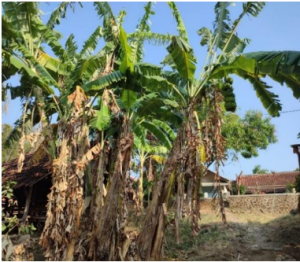
Roid local bananas from Jatigede have great potential to be developed, both in terms of seeds and fruit production. As one of the banana varieties that grow in the Jatigede area, Roid bananas have long been known by the local community. However, as time goes by, awareness of the economic value and advantages of bananas began to receive more attention from various circles. This service program will be carried out in 2023, with a focus on developing local community competencies in propagating bananas in vitro by developing superior local bananas. The success of the Roid banana development program is also inseparable from the enthusiasm of local residents. They showed high interest in participating in training and counseling activities related to the development of bananas. This enthusiasm is an important capital in making Jatigede a center for breeding superior banana seeds, especially through the in vitro method.
One of the breakthroughs that supports the development of Roid bananas in Jatigede is the existence of a household-scale laboratory. This laboratory functions as a center for education and biotechnology applications, especially in the development of superior seeds. The public can learn about in vitro plant propagation techniques, which is one of the modern methods in the world of agriculture. With this laboratory, Jatigede residents are not only consumers of technology, but also able to become the main actors in the application of biotechnology in agriculture. This will open up new opportunities for the development of local agricultural products with higher added value.